Board and Batten Siding: A Timeless Look for Pennsylvania Homes
Want a siding style that looks classic on a farmhouse, clean on a modern build, and right on a Chester County colonial?
Board and batten siding delivers. It’s versatile, durable, and easy to love!
And yes—smart for Pennsylvania’s freeze–thaw climate.
Here’s why: With careful application, board-and-batten not only looks beautiful but, combined with modern insulation and moisture-barrier techniques, is one of many ways you can save money on your power bill.
And at Choice Exteriors, we’re not just about making your home beautiful, but also making sure you get the best value for your money when you work with us. Let’s take a look at how board-and-batten siding could work for you.
Ready? Let’s go!









TL;DR - Board and Batten Siding
- Versatile and Durable: Board-and-batten siding offers a classic look suitable for a range of architectural styles and is exceptionally durable in Pennsylvania's freeze-thaw climate.
- Installation: It consists of wide vertical "boards" and thin vertical "battens" that cover the seams, providing a simple yet effective design that seals out drafts.
- Material Choices: Fiber cement and engineered wood are recommended for their resilience against moisture, pests, and temperature swings, offering long-term value and low maintenance.
- Design Flexibility: It can be used as a complete facade or as an accent to add height, texture, and curb appeal, complementing modern farmhouse, transitional, Craftsman, cottage, and barn styles.
- Value-Savvy: Exterior upgrades, including board-and-batten siding, consistently deliver high returns on investment, making it a wise choice for homeowners looking to boost resale appeal.
What Is Board and Batten Siding—and How Is It Installed?
While Board and Batten sounds like the name of a fancy home goods store, it refers to the components that make up this siding style—wide vertical “boards” and thin vertical “battens” that cover the seams.
This simple pattern dates back to barns and farmhouses because it was fast to build and sealed out drafts. Today, it’s a design staple on everything from modern farmhouses to Craftsman remodels.
At the high level, board and batten consists of:
- A sheathing and weather-resistive barrier (WRB)
- Vertical starter/trim details at corners, doors, and windows
- Boards installed vertically (panel or plank, depending on material)
- Battens fastened over panel seams to create the signature look..
- Proper flashing and drainage details to manage water behind the cladding
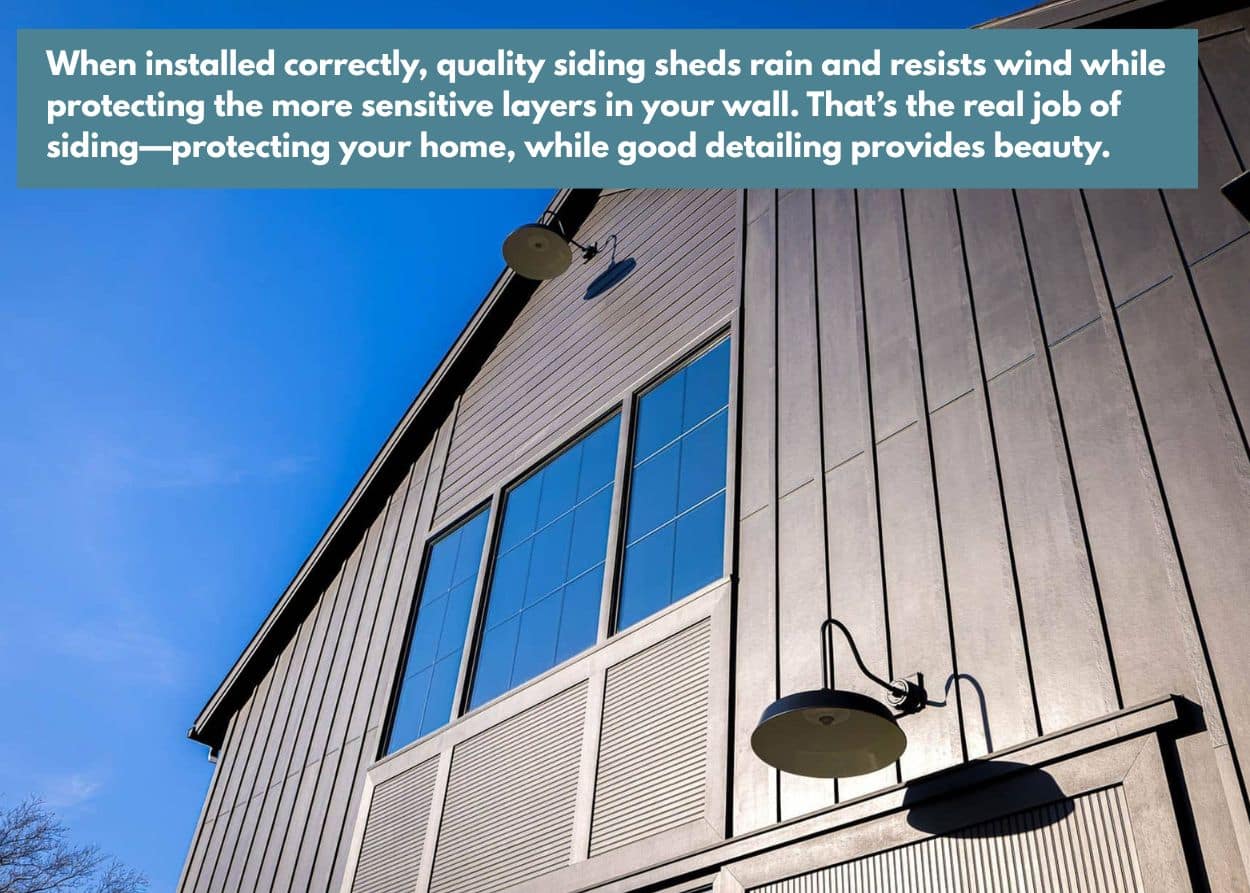
Why it matters: When installed correctly, quality siding sheds rain and resists wind while protecting the more sensitive layers in your wall. That’s the real job of siding—protecting your home, while good detailing provides beauty.
Timeless Design, Durability & Easy Maintenance
Good siding shouldn’t just be about good looks. It also has to be long-lasting and easy to maintain, or it’ll end up being something you won’t enjoy. With that in mind, here’s why board and batten siding is an excellent choice for your home:
It looks good on almost anything.
Board and batten’s vertical lines add height, texture, and curb appeal to small ranches and taller, two-story homes alike.
It’s durable (when you choose the right material)
Pennsylvania sees dramatic temperature swings and numerous freeze-thaw cycles. Those cycles cause your walls to expand and contract, drawing moisture in and around them and stressing weaker materials over time. Material choice and installation quality make the difference.
It’s low maintenance (with modern materials).
Fiber-cement and engineered-wood options resist rot, pests, and weather—and keep paint looking fresher longer than many alternatives. As an added safety bonus, fiber cement is also noncombustible and won’t contribute fuel to a fire.
It boosts resale appeal.
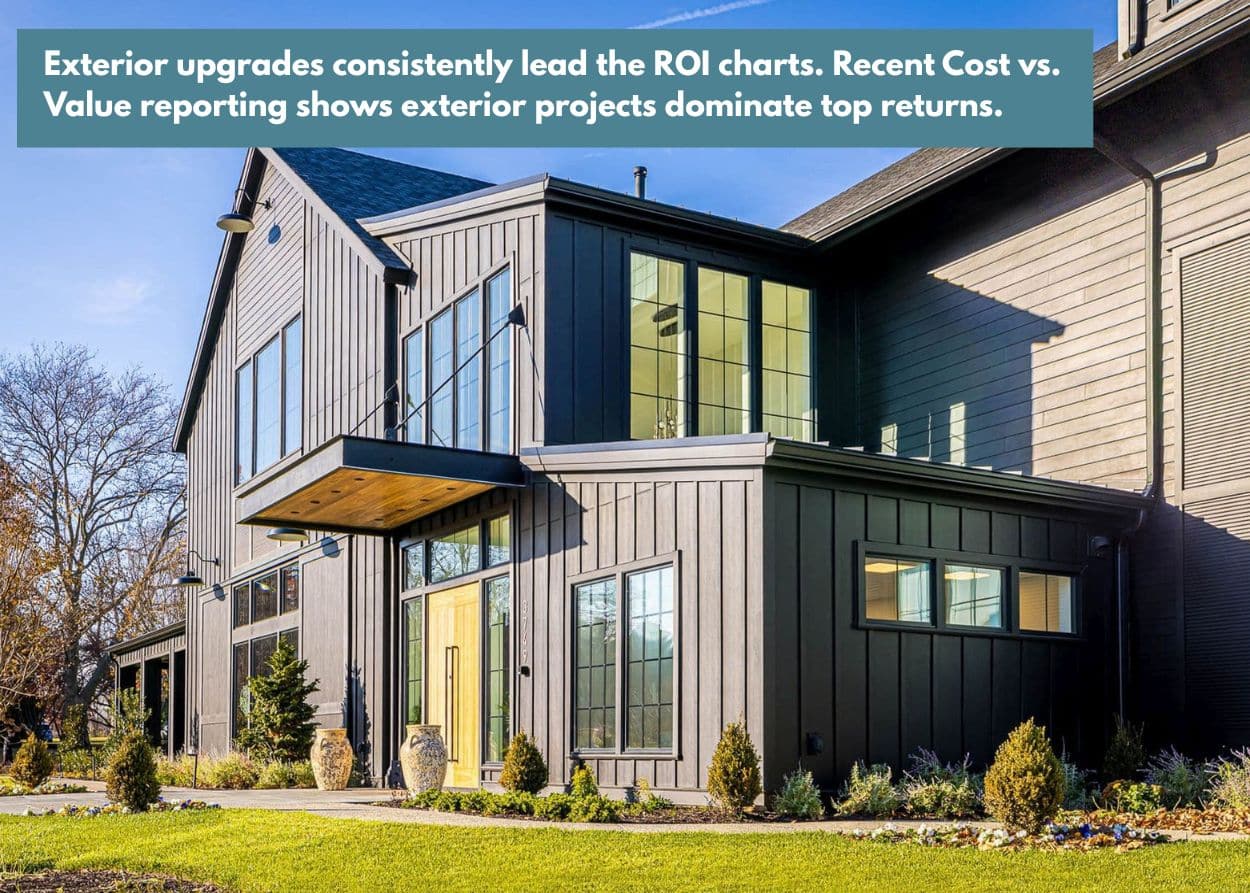
Exterior upgrades consistently lead the ROI charts. Recent Cost vs. Value reporting shows exterior projects dominate top returns—great news if you’re refreshing curb appeal in Coatesville, Lancaster, or across the Main Line.
Where It Shines: Architectural Styles That Love Board & Batten
Good news—it’s not just for farmhouses.
- Modern Farmhouse: Still a favorite, board-and-batten perfectly complements the white siding, black windows, and warm wood accents of contemporary farmhouse style, providing clean, high contrast.
- Transitional/Modern: Mixed cladding with vertical board-and-batten in key zones, such as gable ends, bump-outs, or stair towers, adds texture without visual clutter.
- Craftsman & Cottage: Board-and-batten never looked better on classical American Craftsman-style and cottage homes. Narrower battens and earth-tone palettes soften lines and feel right at home in wooded Pennsylvania neighborhoods.
- Barn & Outbuildings: While the word “barn” might conjure images of farm animals, barn homes are more of a nod to the style's heritage—functional, handsome, and cohesive with rural landscapes, yet adaptable to more modern stylings.
Pro tip: You can use board-and-batten as an accent (upper gables, entry volume), paired with lap or shingle siding for contrast—and budget balance.
Popular Materials (and What’s Different About Each)
Not all board-and-batten is the same. The material you pick affects cost, upkeep, and performance in Pennsylvania’s climate.
Fiber Cement
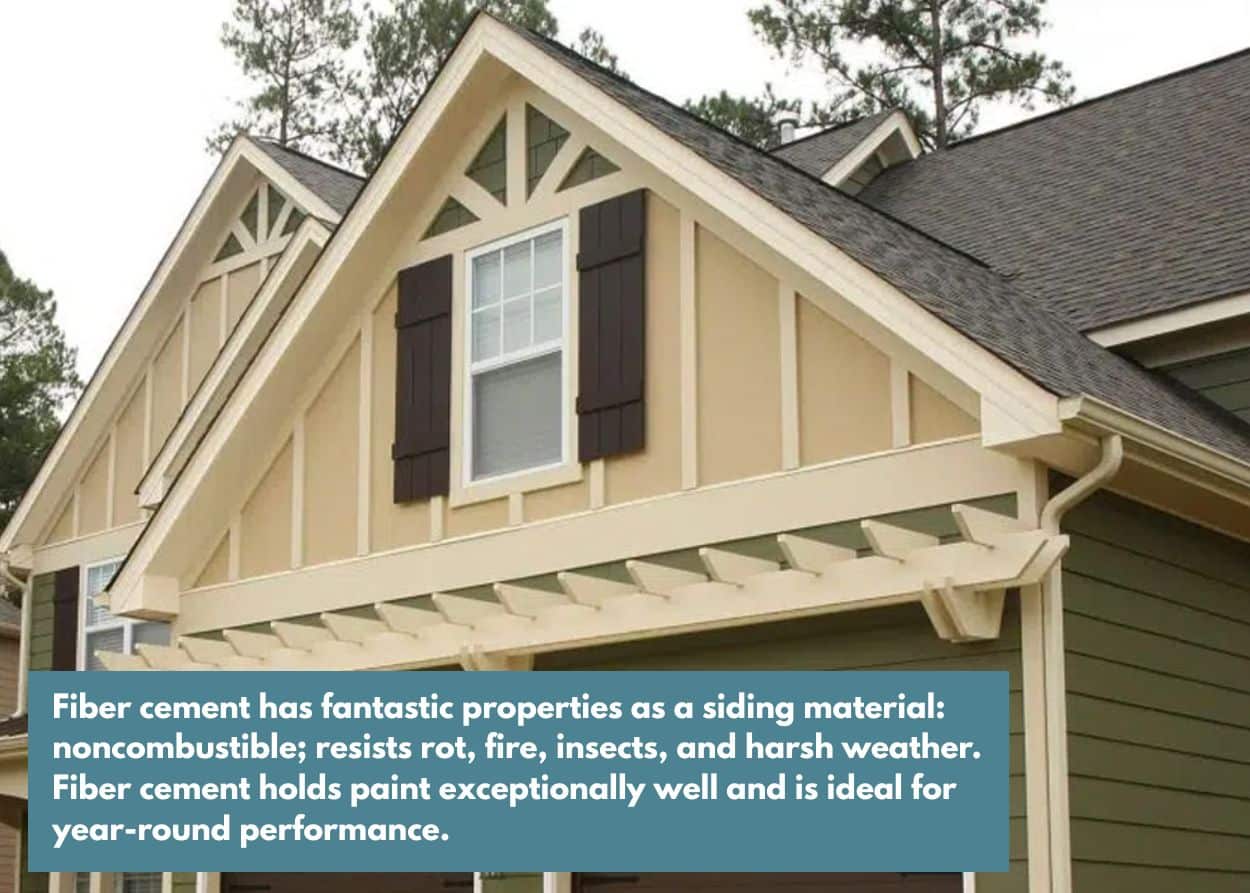
- Why it’s a good choice for PA homeowners: Fiber cement has fantastic properties as a siding material: noncombustible; resists rot, fire, insects, and harsh weather. Fiber cement holds paint exceptionally well and is ideal for year-round performance. Choice Exteriors recommends James Hardie™ fiber-cement Hardie® Trim Batten Boards for your exterior siding.
- Maintenance: It’s practically install-and-forget. Fiber cement generally lasts at least 50 years, with some estimates up to 100 years. You’ll need to worry more about paint fading over time than about your siding deteriorating.
- Look: Crisp, stable panels with sharp shadow lines.
Engineered Wood
- Why it’s a good choice for PA homeowners: Lighter than fiber cement, engineered wood is eco-conscious, impact-resistant, and backed by extended warranties (often 50-year limited substrate warranties), and available in many natural wood colors. LP Smartside® is one such popular manufacturer of engineered wood.
- Maintenance: Low to moderate. For the most part, some mild detergent and a hose are enough to keep it clean.
- Look: Warm wood aesthetic with modern durability.
Vinyl
- Why choose it: Budget-friendly and widely available, vinyl can last 20–40 years with proper installation and care. As an injection-molded material, vinyl siding can be manufactured with virtually any texture and color. Panelized vertical options can mimic the board-and-batten look.
- Maintenance: Low to moderate. Like engineered wood, mild detergent and a hose are enough to keep it clean.
- Look: Your mileage may vary. While more expensive vinyl siding can replicate wood grains very well, cheaper vinyl siding looks like plastic.
Natural Wood
- Why choose it: Unmatched authenticity. When done right, wood siding provides a natural richness unmatched by any other material.
- Maintenance: Wood requires the highest maintenance in a wet, freeze–thaw climate. Vigilant sealing/painting, often every 2 to 3 years, frequent inspections, and careful detailing are required to manage moisture and prevent damaging pests.
- Look: Beautiful, warm wood; classic and timeless. Will it need a lot of maintenance? Definitely. Is it worth the effort? Absolutely.
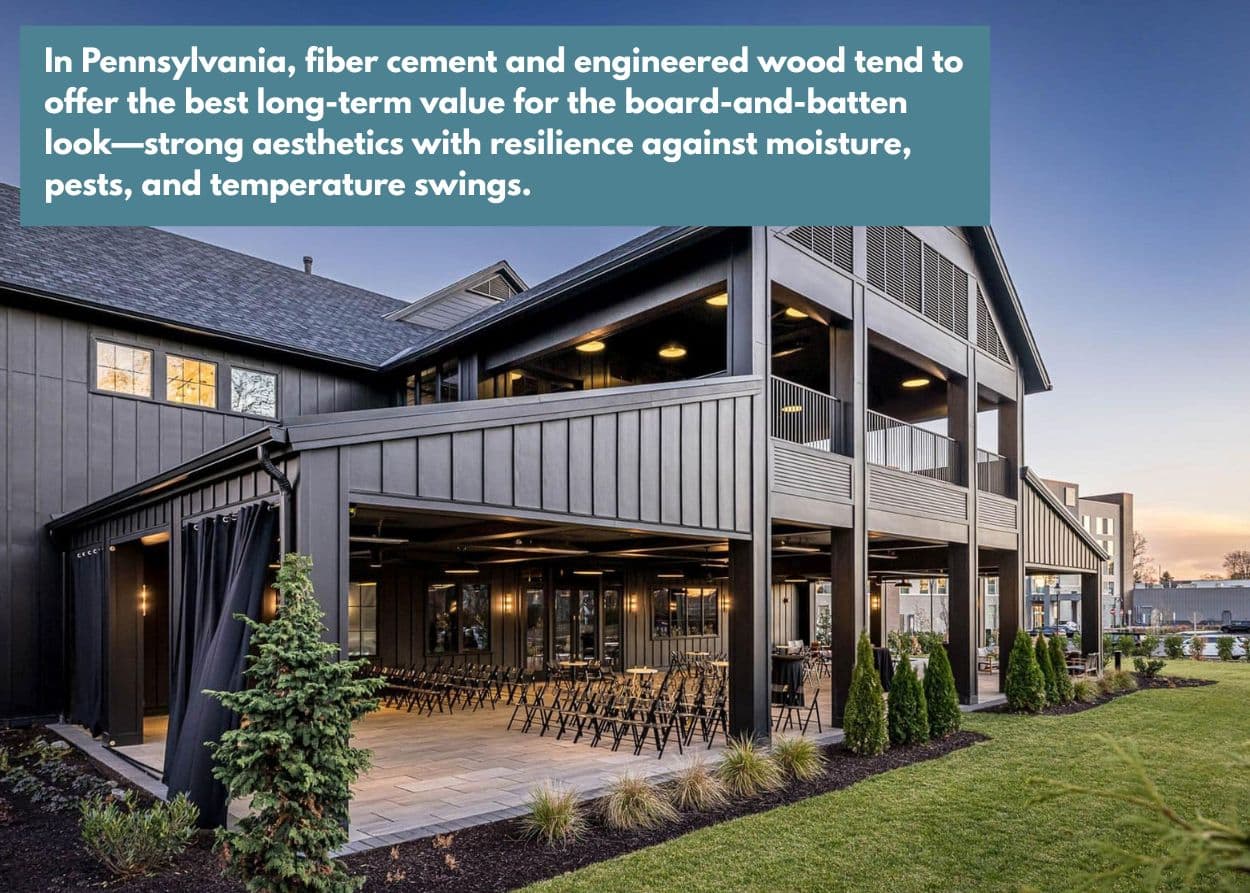
Bottom line: In Pennsylvania, fiber cement and engineered wood tend to offer the best long-term value for the board-and-batten look—strong aesthetics with resilience against moisture, pests, and temperature swings.
Durability in Pennsylvania’s Freeze–Thaw Climate
Let’s talk reality. Our winters aren’t just cold—they’re variable. Temperatures bounce above and below freezing, which means water seeps into cracks or gaps, expanding and contracting during freeze-thaw cycles. Over time, that’s tough on exteriors.
To combat the vicious cycle of Pennsylvania’s variable weather, look for:
- Rigid, moisture-resistant materials like fiber cement and engineered wood.
- Proper water management behind the cladding—weather-resistive barriers, flashing, and drainage planes that shed water fast. If you have a stucco exterior, it’s not a bad idea to have it inspected and consider stucco remediation if there is damage.
- Professional installation with attention to penetrations, trim, and transitions so water can’t sneak in and sit.
- Ventilated assemblies and smart roof/soffit details to reduce ice-dam and moisture risks.
The result? A façade that keeps looking great—and keeps the structure healthy.
Design Inspiration & Color Trends for 2026
Are you hoping to update your siding within the next year? Look to timeless, nature-inspired looks of warm whites, earthy greens, and inky accents—great with stone or brick foundations standard across the Keystone State. Try these pairings:
- Inviting whites (e.g., Benjamin Moore White Dove) with charcoal metal accents and natural wood porch ceilings. Modern farmhouse—without feeling stark.
- Chalky sages or dusky taupes for a grounded, upscale look that plays well with mature trees and stone walls.
- Reserve true jet black for accents rather than full facades if you want longevity and a softer streetscape. Deep charcoals read richer and age better.
Use board and batten strategically:
- For elevation, add vertical wooden strips to a wall, creating a dimensional, finished look that can make a room or exterior appear taller.
- Gable accents break up horizontal lines by creating a textured, dimensional look that can be modern or traditional, depending on the materials and colors.
- Entry volumes to draw the eye to your front door
Why Board and Batten Is a Smart Choice for Pennsylvania Homes
It handles the weather—when installed right.
Combined with fiber cement or engineered wood, board-and-batten exteriors offer excellent moisture, pest, wind, and fire resistance. That’s peace of mind in a state with wet springs, hot summers, and icy winters.
It raises curb appeal.
Vertical lines add drama and height. Paired with the right palette, it looks fresh and current—and it aligns with what national editors and homeowners say sells curb appeal today.
It’s flexible.
You can run it full height, or mix with lap or stone. It’s perfect for historic main streets and new cul-de-sacs alike.
It’s value-savvy.
Exterior projects remain top performers for resale—smart if you may list within a few years.
Comparing Board & Batten to Other Siding Styles
While board-and-batten looks great in many styles, it’s not the only design out there. Here are some popular alternatives:
Board & Batten vs. Horizontal Lap
- Look: Horizontal lap offers classic horizontal lines, as opposed to board & batten’s vertical texture. It consists of wide planks that overlap, offering a classic, simple look that complements virtually any home style.
- Maintenance: Similar when materials are equal (like different brands of fiber cement)
- Use case: Board and batten excels for height or accenting; lap excels for traditional profiles
Board & Batten vs. Shingles and Shakes
- Look: Shingles and shakes offer rustic texture, unlike board & batten’s crisper, more modern lines. Though that doesn’t have to mean rustic materials. Today’s shingles can be made from fiber cement and vinyl rather than traditional cedar.
- Maintenance: Depends on the material. Also note that shingles are often used as accents to add warmth.
Board & Batten vs. Stucco
- Look: Stucco is monolithic and can be smooth or textured, unlike board & batten’s strong shadow lines. It’s a versatile finish that encompasses a variety of styles.
- Performance: Although the two cladding systems differ, they both rely on proper moisture management and detailing to last in PA’s climate.
Ready to See It on Your Home?
When it comes to having siding installed right, you want a crew that knows Pennsylvania homes—and our weather. Our team at Choice Exteriors brings:
- Material guidance (fiber cement, engineered wood, vinyl, or wood) based on your goals and neighborhood context.
- Moisture-smart details—flashings, WRB, and drainage that protect your walls (the unglamorous stuff that preserves your investment).
- Design help—elevations, trim profiles, and color consults aligned with current trends and local tastes.
- Historic & modern experience—from classic barn-style accents to clean contemporary lines.
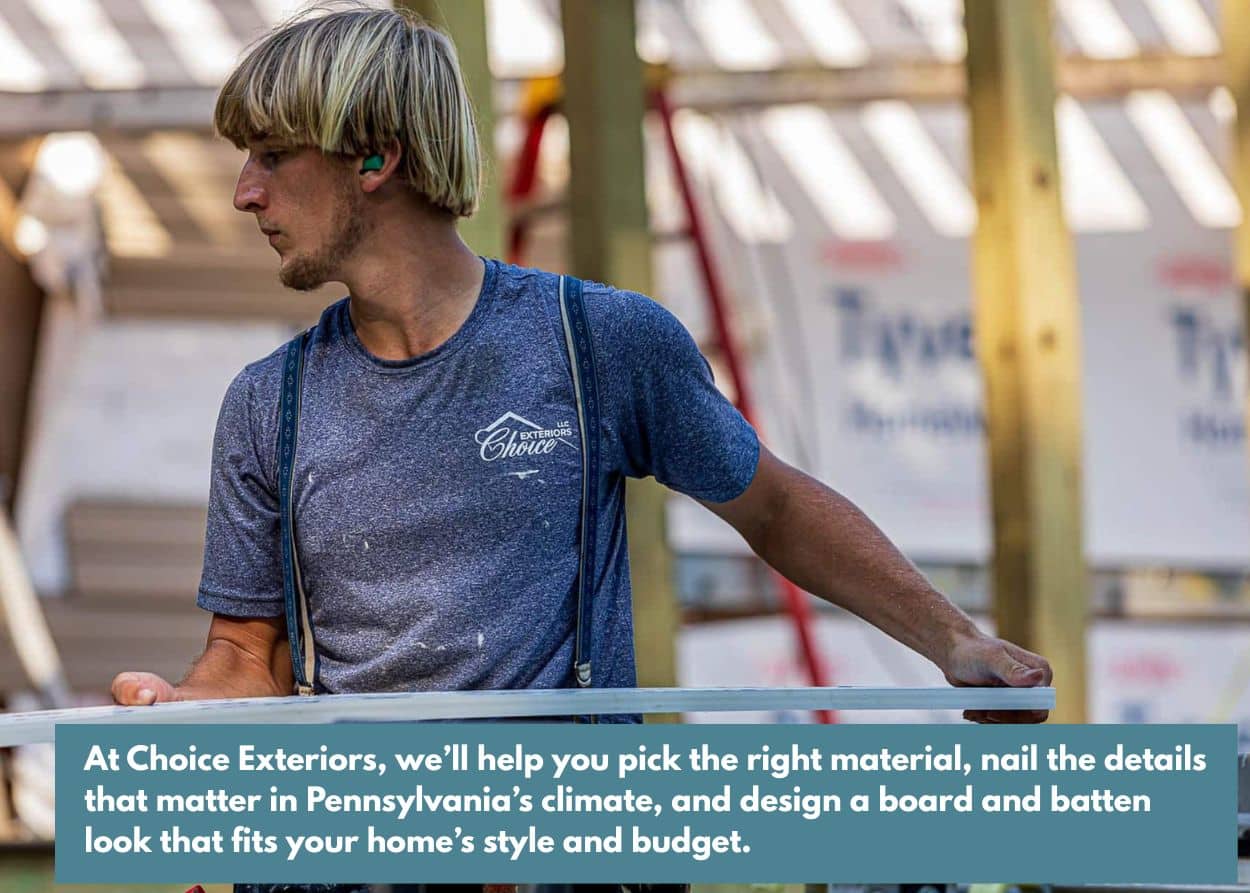
At Choice Exteriors, we’ll help you pick the right material, nail the details that matter in Pennsylvania’s climate, and design a board and batten look that fits your home’s style and budget.
Contact us now to request a free siding consult with Choice Exteriors—serving Coatesville, Chester County, and nearby New Jersey and Delaware. Let’s build curb appeal that lasts.