The Pros & Cons of Cedar Shake Siding
There’s something undeniably charming about cedar shake siding. Maybe you’re picturing a cozy cottage tucked away in the woods, where the siding blends naturally with towering trees and mossy stone paths. Or perhaps a breezy beach cabin comes to mind—salt air, sun-soaked afternoons, and weathered cedar that feels right at home by the shore. Even modern homes are embracing cedar shake siding for its warmth, texture, and connection to natural, thoughtfully sourced materials.
If you’re drawn to cedar shake siding, you’re not alone. Still, beauty isn’t the only factor when choosing siding. You may be wondering how cedar shakes perform over the long haul, what kind of maintenance they require, and how the cost compares to other options.
That’s where Choice Exteriors comes in. As siding experts, we believe homeowners deserve clear, honest information. In this guide, we’ll break down the pros and cons of cedar shake siding so you can make a confident, informed decision that fits both your style and your lifestyle.




TL;DR - The Pros & Cons of Cedar Shake Siding
- Cedar shake siding is a historic building material that still holds its own today.
- Cedar shake siding is popular due to its timeless aesthetic and natural durability
- On the other hand, cedar shakes require a significant amount of maintenance and upkeep’, and can be susceptible to fire, moss, algae, and rot.
- Although many people find cedar one of the most beautiful siding options, other siding types, such as vinyl or fiber cement, may offer higher durability, lower cost, and less maintenance.
- Cedar shake siding works well in moderate, dry climates, on rustic or cottage-style homes.
What Is Cedar Shake Siding?
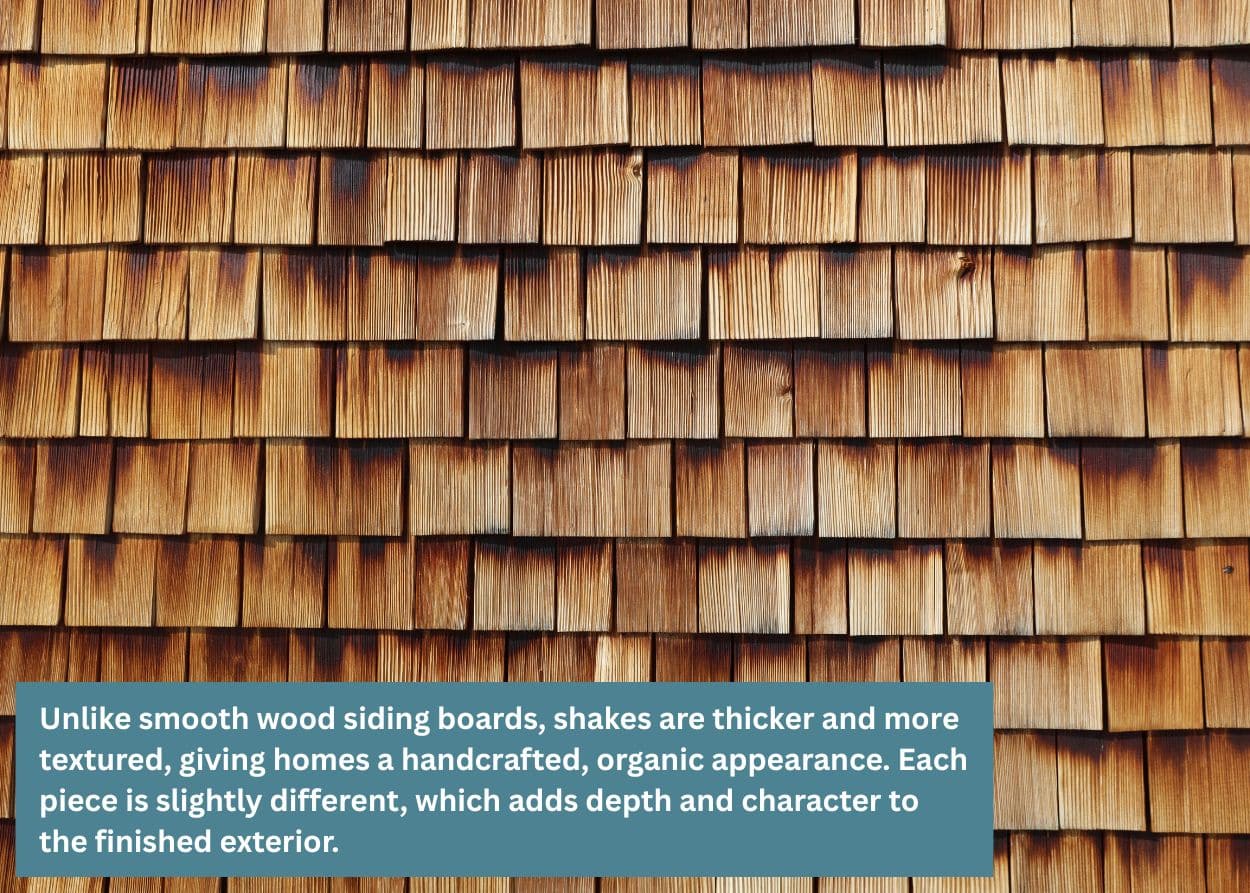
Cedar shake siding is a type of wood siding made from split or sawn cedar logs, most commonly Western Red Cedar or Eastern White Cedar. Unlike smooth wood siding boards, shakes are thicker and more textured, giving homes a handcrafted, organic appearance. Each piece is slightly different, which adds depth and character to the finished exterior.
Historically, cedar shakes were used out of necessity. Early settlers valued cedar for its natural resistance to rot, insects, and moisture. Shakes were split by hand and installed on homes, barns, and outbuildings because cedar held up well in harsh weather and was widely available in certain regions of North America. Over time, cedar shake siding became associated with coastal homes, mountain cabins, and historic cottages.
Today, cedar shake siding remains popular for its natural beauty and versatility. It works equally well on traditional Cape Cod–style homes, rustic retreats, and modern designs that emphasize natural materials. Homeowners can leave cedar shakes untreated to weather into a soft gray patina or stain them to maintain a rich, warm tone. However, when compared to modern siding options, cedar shakes are high-maintenance and susceptible to damage.
Pros of Cedar Shake Siding
One of the biggest advantages of cedar shake siding is its timeless aesthetic. The natural grain, variation, and texture create visual interest that manufactured siding often struggles to replicate. Cedar shakes can make a home feel warm, inviting, and grounded in its surroundings—whether that’s a wooded lot or a coastal landscape.
When compared to other natural siding materials, cedar is remarkably durable. It contains oils that help resist rot, decay, and insect damage without the need for chemical treatments. When properly installed and maintained, cedar shake siding can last 30 to 50 years or more. It also performs well as an insulator, helping regulate indoor temperatures by reducing heat loss in winter and heat gain in summer.
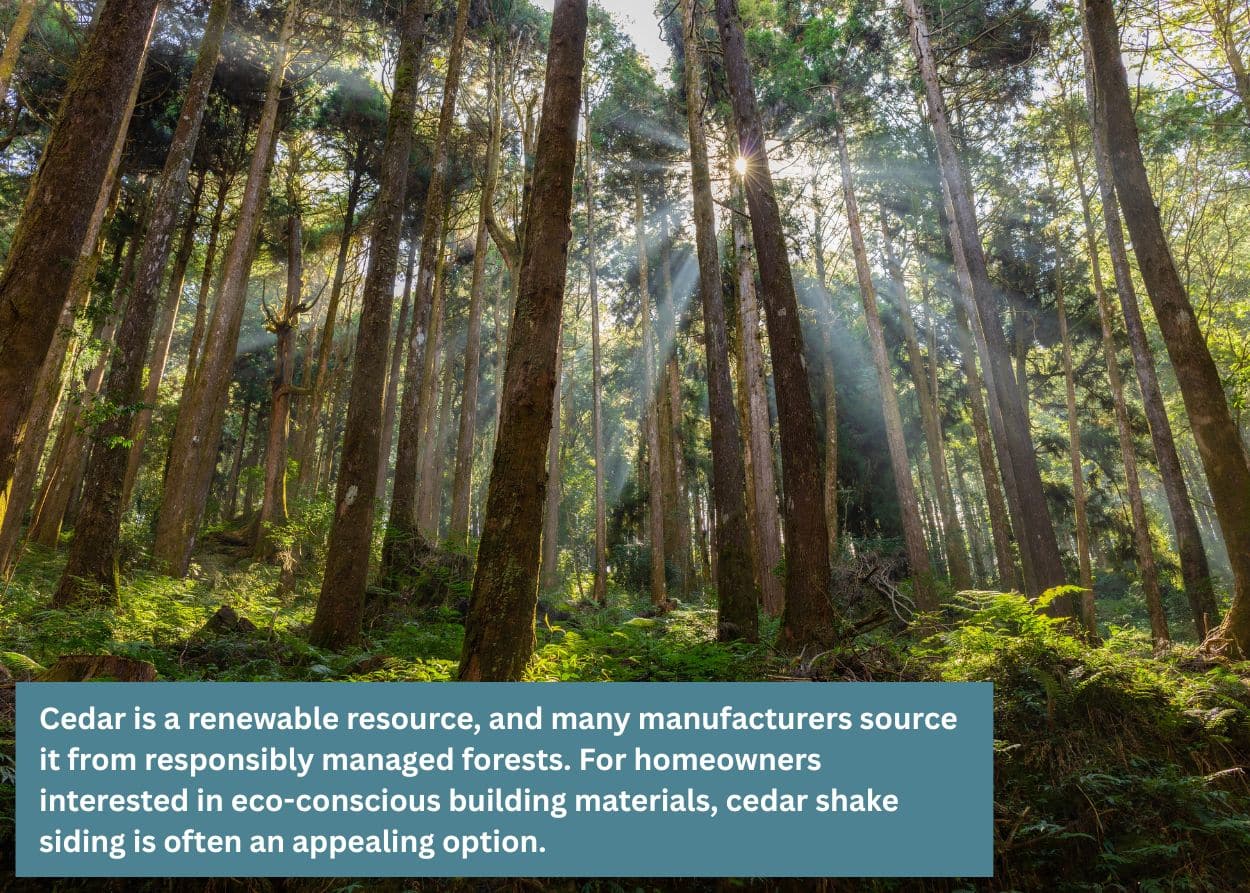
Another pro is sustainability. Cedar is a renewable resource, and many manufacturers source it from responsibly managed forests. For homeowners interested in eco-conscious building materials, cedar shake siding is often an appealing option.
Finally, cedar shake siding offers flexibility in appearance. You can stain it in a variety of tones, paint it, or allow it to weather naturally. This adaptability makes it easier to match your home’s style and evolve its look over time.
Still, it’s important to remember that cedar shake is not the only inviting, aesthetically pleasing siding option out there! For more siding ideas, read our blog on board and batten siding, as well as our guide to transforming your home with exterior renovations.
Cons of Cedar Shake Siding
Despite its beauty, cedar shake siding comes with drawbacks. One of the most significant is maintenance. Unlike vinyl or fiber cement, cedar requires regular upkeep to stay in good condition. This can include cleaning, staining, sealing, or painting every few years to protect against moisture, UV damage, and mildew.
Cost is another consideration. Cedar shake siding typically has a higher upfront price than vinyl and can be comparable to or more expensive than fiber cement. Installation costs are also higher, as cedar shakes require skilled labor and careful installation to ensure proper performance.
Cedar is also more vulnerable to fire than non-combustible siding materials. In areas with wildfire risk or strict fire codes, this may be a limiting factor unless fire-retardant treatments are used.
Additionally, cedar shake siding can be sensitive to climate conditions. In consistently damp or shaded environments, improper maintenance may lead to moss, algae, or rot. While these issues are manageable, they do require commitment from the homeowner.
Side-by-Side Comparisons: Cedar Shake vs. Vinyl vs. Fiber Cement
You have so many options when it comes to siding that making an informed decision may feel overwhelming. To help you out, let’s compare and contrast three popular siding options: Cedar shake siding, vinyl siding, and fiber cement siding.
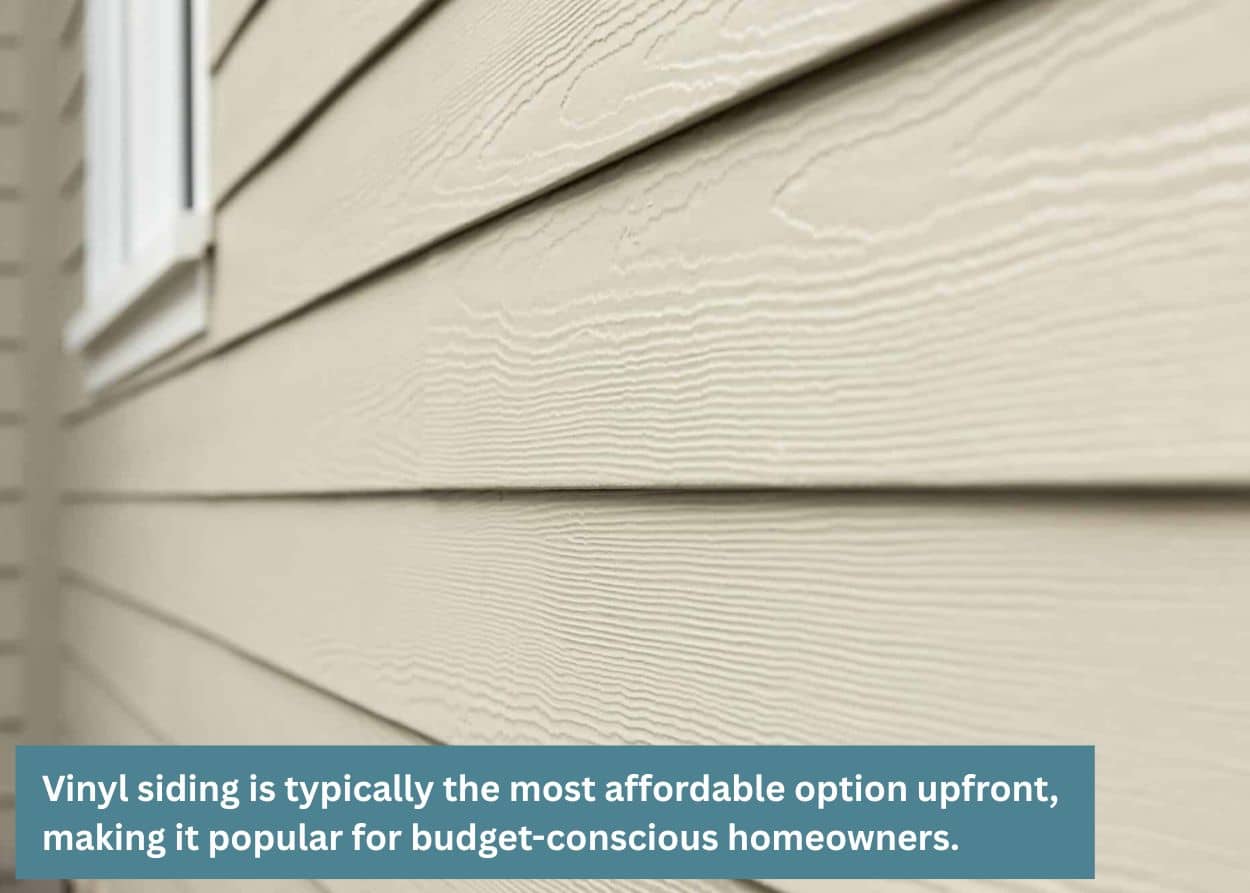
Cost: Vinyl siding is typically the most affordable option upfront, making it popular for budget-conscious homeowners. Cedar shake siding sits at the higher end of the price range, while fiber cement falls somewhere in between, depending on style and finish.
Durability: Fiber cement is extremely durable and resistant to fire, insects, and moisture. Many fiber cement products are available in a shake-style profile, offering the look of cedar without the same level of upkeep. Vinyl is also durable but can crack in extreme cold or warp in high heat. Cedar is long-lasting when maintained, but it is more vulnerable to environmental factors.
Maintenance: Vinyl requires minimal maintenance—mostly occasional cleaning. Fiber cement requires periodic repainting but is otherwise low-maintenance. Cedar shake siding requires the most attention, with regular sealing or staining needed to preserve its appearance and performance.
Appearance: Cedar offers unmatched natural beauty and authenticity. Fiber cement does an excellent job replicating the shake look with more consistency, while vinyl tends to look more uniform and less textured.
Remember, it can be difficult to make an informed decision simply by browsing the Internet. Go to showrooms, talk to contractors, look at options in person, and talk to friends and acquaintances about their experiences with various siding types!
When to Consider Cedar Shake Siding
Cedar shake siding is best suited for moderate climates where extreme moisture or wildfire risk is not a constant concern. It performs especially well in areas with good airflow and sunlight, which help the wood dry naturally after rain.
Architecturally, cedar shakes shine on cottages, Cape Cod homes, cabins, coastal properties, and even modern homes that emphasize natural materials. If you value character, texture, and a timeless look—and you’re willing to invest in maintenance—cedar shake siding may be a great fit.
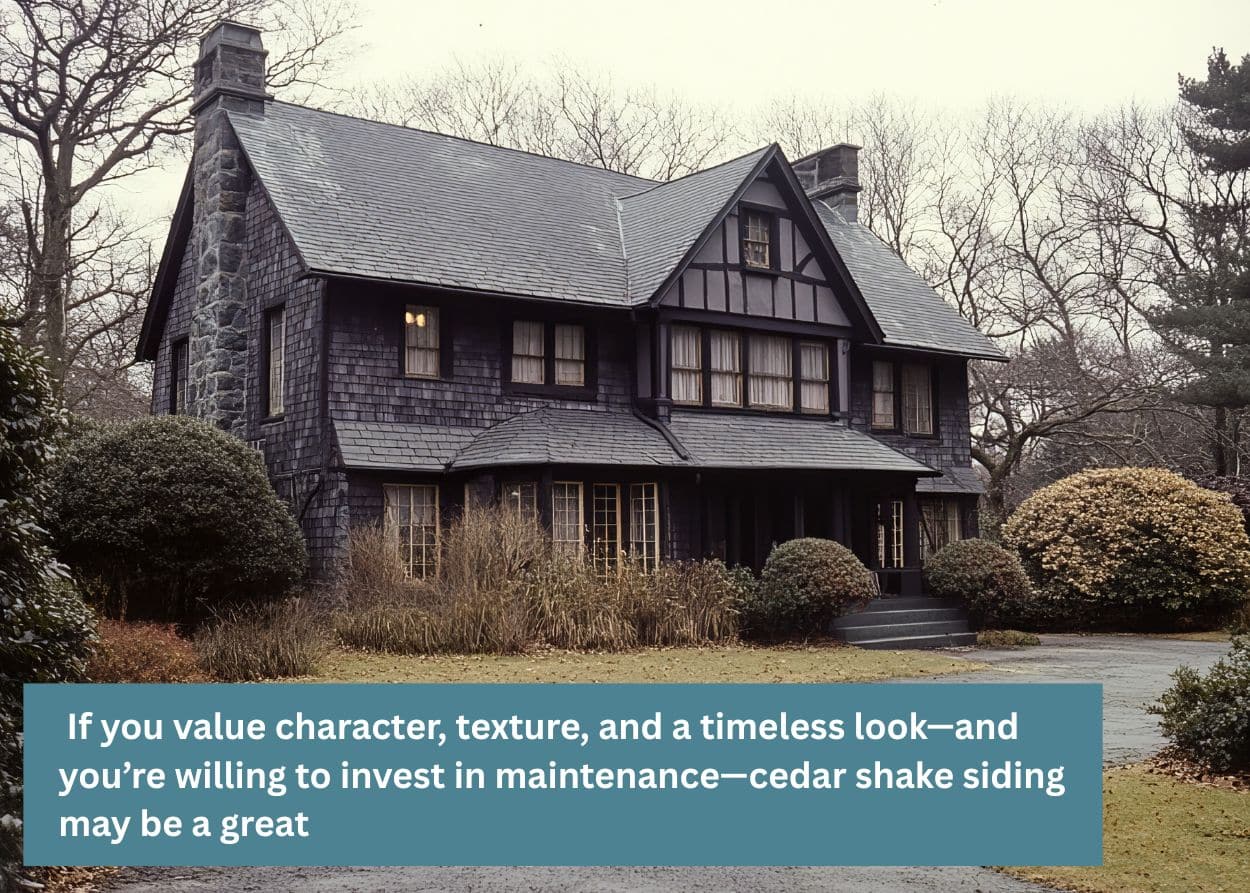
On the other hand, depending on your situation and climate, cedar shake siding may prove more trouble than it’s worth.
How to Find an Expert for My Siding Project
At Choice Exteriors, we understand how stressful siding issues can be. Your home’s exterior isn’t just about curb appeal—it’s about protection, comfort, and long-term value. That’s why it matters to us to deliver expert craftsmanship, honest guidance, and outstanding customer service on every project.
We take the time to help homeowners understand their options, whether that’s cedar shake siding or a lower-maintenance alternative that still achieves the look you love. Serving Chester, Montgomery, and Delaware counties in Pennsylvania, our team is proud to provide reliable, high-quality siding solutions.
If you want help weighing the pros and cons of siding options for your home, Choice Exteriors would be delighted to help. Fill out a contact form or give us a call, and let’s talk about your vision!